Rebates
Ontario Energy Rebate Scam Warning: Invoice Checks for 2026
Use this Ontario energy rebate scam warning contractor invoice 2026 guide to verify invoices, avoid pressure, and report suspicious offers.
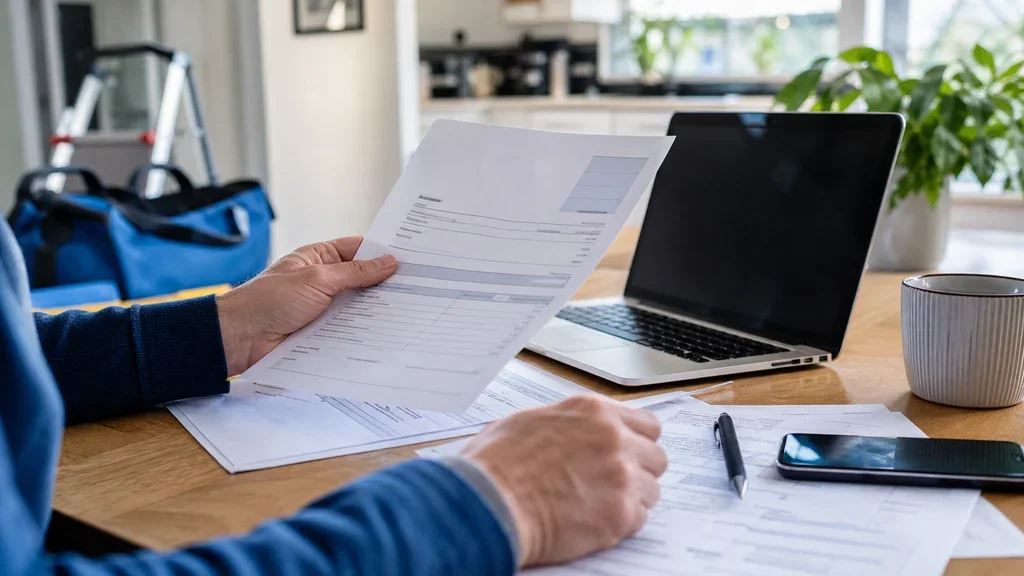
Ontario energy rebate scam warning contractor invoice 2026 is the kind of search people make after something already feels off: a surprise phone call, a door visit, a rushed quote, or an invoice that says a rebate will be handled for you. Treat that discomfort as useful information. In Ontario, legitimate rebate work can involve contractors, service organizations, invoices, and uploads, but the order of those steps matters.
Start with one rule: do not let a rebate promise turn into a same-day payment decision. A real contractor should be able to explain the program, put the quote in writing, give you time to verify it, and accept that you may check the official program page before moving ahead.
| What you see | Likely cause | First move |
|---|---|---|
| A contractor says the rebate expires unless you sign today | Pressure tactic or a commission-driven pitch | Pause, keep the quote, and verify the program yourself |
| The invoice subtracts a rebate you have not applied for | Possible misleading pricing or an unconfirmed incentive | Ask where the rebate is listed and who submits the claim |
| Someone asks to photograph your utility bill at the door | Attempt to collect account details or personal information | Decline and call your utility using the number on your bill |
| The company name on the quote does not match the person at your door | Unclear contractor identity or subcontracting confusion | Request legal name, HST number, licence details, and written contacts |
| The offer uses a familiar program name but links to a lookalike site | Fake ad, fake website, or lead-generation page | Type the official program URL directly into your browser |
Why contractor invoices deserve extra attention in 2026
Rebate scams work because the paperwork can look ordinary. A quote may show insulation, heat pumps, windows, or air sealing in neat line items, then add a rebate line that makes the final price look urgent and affordable.
Here is the thing: an invoice is not proof that a rebate is real. It is only proof that a company wants to charge you. Before you pay a deposit, compare the work, equipment, eligibility path, contractor status, and payment instructions against the official program rules.
Red flags that should slow the job down
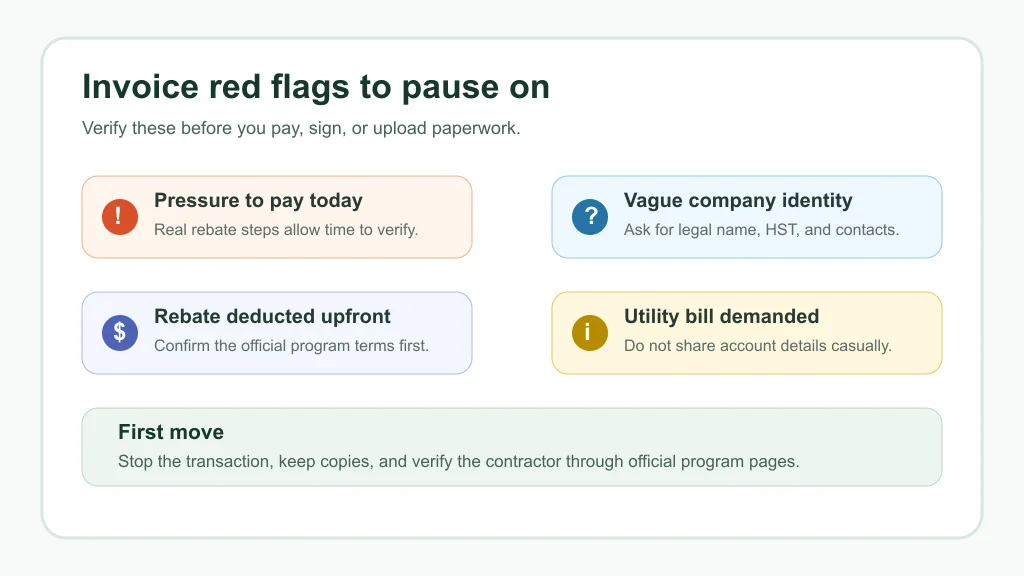
Pushy sales language is the easiest warning sign, but it is not the only one. Watch for a contractor who will not leave the paperwork behind, refuses to identify the program clearly, or says you should not call the utility because that will "delay approval."
Be wary of payment instructions that feel strange. The Ontario Energy Board warns consumers that utilities will not ask for payment through gift cards, e-transfer, or bitcoin. That matters because scammers often mix utility language, rebate language, and urgent payment threats in one pitch.
- Same-day discount: The price changes if you take time to verify.
- Guaranteed approval: The contractor promises a rebate before eligibility is checked.
- Bill access request: They want account numbers, photos, or login details before you know who they are.
- Unclear rebate owner: They cannot say whether the program is from Save on Energy, Enbridge, a utility, or another official source.
- Odd invoice math: The invoice hides taxes, financing charges, cancellation rights, or the rebate deduction.
How to verify a rebate contractor before you sign
Use a calm, boring process. Ask for the contractor's legal business name, HST number, phone number, physical address, written scope, model numbers where equipment is involved, and the exact rebate stream they are claiming applies.
Then check the official path yourself. For heat pump work, contractor participation can matter. For assessment-based rebates, the service organization and pre-work assessment can matter. For invoice-heavy submissions, your proof of payment checklist should match the program instructions before you upload anything.
If a project is still at the quote stage, compare the invoice language with a practical contractor quote checklist. If the job is tied to windows or doors, use a separate window rebate contractor invoice checklist because opening counts, model details, and payment proof can create easy mistakes.
What a safer invoice should show
A cleaner invoice does not guarantee the company is legitimate, but it gives you something to check. Look for a specific work address, contractor identity, itemized labour and materials, taxes, payment terms, cancellation terms, equipment or product identifiers, and a clear note about who is responsible for rebate submission.
A vague invoice, by contrast, creates risk. "Energy upgrade package" is not enough. Neither is "government rebate applied" without the program name, eligibility basis, and submission path.
Use the same discipline for adjacent upgrades. If a contractor mentions attic insulation R-value tiers, exterior wall insulation rebate rules, basement air sealing rebate rules, or a required blower door test guide, ask them to connect those claims to the actual program language.
Where homeowners get tripped up
Most problems start when the rebate is treated like a coupon. Ontario home-efficiency incentives often have conditions, and those conditions can depend on the home, fuel source, equipment, assessment timing, contractor participation, or proof documents.
For example, assessment requirements can differ by upgrade. Check whether a window and door assessment guide, a basement insulation assessment guide, or the heat pump water heater assessment path applies before assuming the contractor's invoice is enough.
Heat pump conversions deserve the same caution. Review the heat pump pre-approval checklist, the propane to heat pump eligibility checks, the oil to heat pump switching checks, and the $1,250 per ton heat pump rule if those claims show up in the sales pitch.
If you already paid or shared documents
Move quickly, but keep your head. Save the invoice, quote, texts, emails, call logs, business cards, photos, financing documents, and the URL of any ad or landing page you used.
Contact your bank or credit card provider if money has moved. If utility account information was shared, call the utility using the number printed on your bill. If the contractor claimed to be tied to a program, contact the program through its official website, not through the number the salesperson gave you.
For application worries, check the Home Renovation Savings application portal guide and the rebate cheque status guide. For timing claims, compare the pitch with the attic insulation rebate deadline guide before accepting a false deadline.
Quick Checklist
- Do not pay a deposit because someone says the rebate expires today.
- Confirm the exact rebate program on an official site before signing.
- Match the contractor name to any official participating list where one applies, such as the participating contractor list guide.
- Ask for a detailed invoice with legal business name, HST number, line items, taxes, and payment terms.
- Do not share utility bills, account numbers, or login details with an unverified caller or visitor.
- Keep every quote, invoice, message, and ad screenshot if something feels suspicious.
- For insulation work, confirm contractor participation where relevant, including the attic insulation participating contractor guide.
Official sources: Save on Energy scam awareness · Ontario Energy Board energy scams. Check current program pages before applying.
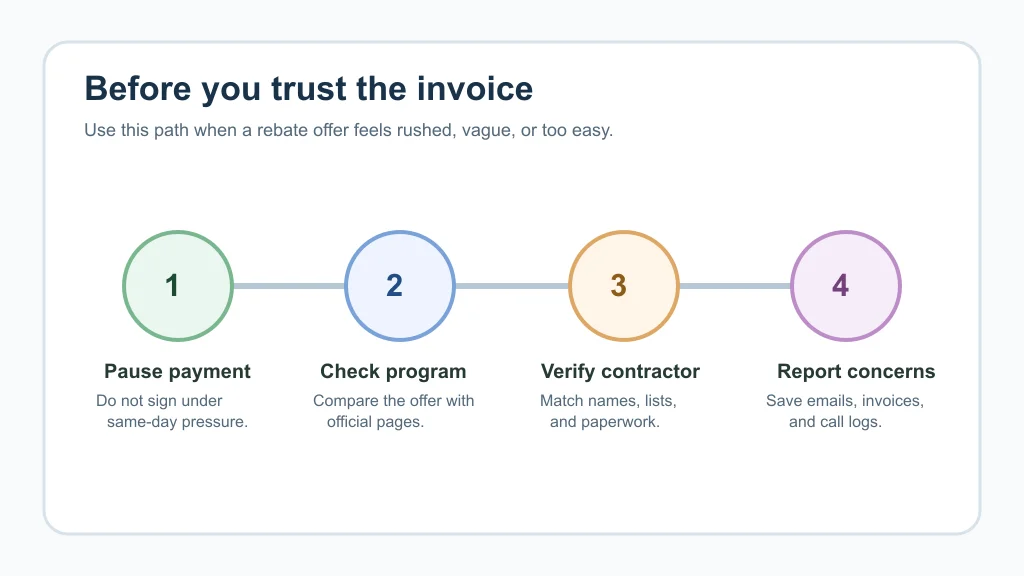
Bottom line: a legitimate rebate should survive basic verification. If the contractor invoice, payment request, or door-to-door pitch falls apart when you ask for time and official proof, that is your cue to step back.
Frequently Asked Questions
how do i know if an ontario energy rebate contractor is real?
Ask for the legal business name, written scope, HST number, program name, and proof that the contractor belongs on any official list required for that rebate stream. Then verify through the official program site before paying.
can a contractor deduct an ontario rebate from my invoice?
Do not assume a deduction is valid just because it appears on an invoice. Ask who receives the rebate, who submits the paperwork, what eligibility rule applies, and whether the official program allows that pricing structure.
should i show my utility bill to a door-to-door rebate salesperson?
No, not until you have independently verified who they are and why the information is needed. If someone appeared uninvited, decline and contact your utility using the phone number on your bill.
what should i do if i paid a suspected rebate scam contractor?
Save all documents, contact your bank or card provider, call your utility if account details were shared, and report the concern through official channels such as the program, the OEB, or the Canadian Anti-Fraud Centre.
are home energy assessments required for every rebate in ontario?
No. Requirements vary by program and upgrade. Some rebates use an assessment path, while others rely on contractor or product requirements, so check the current official rules before booking work.