Insulation
Ontario Exterior Wall Insulation Rebates in 2026: What Homeowners Need to Know
Ontario exterior wall insulation rebate 2026 rules, amounts and assessment steps, with paperwork tips before you open walls.
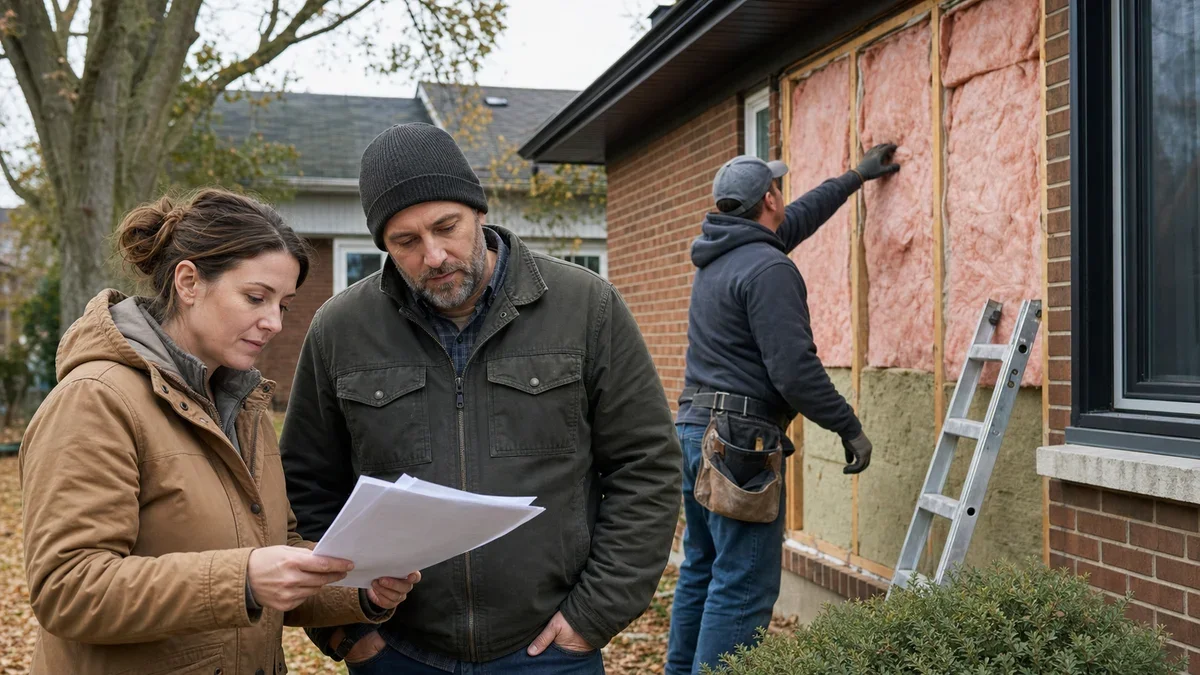
If you are looking up the Ontario exterior wall insulation rebate 2026, you are probably trying to answer two practical questions: does exterior wall insulation still qualify, and what has to happen before a contractor opens the wall? For Ontario homeowners, the short answer is yes, exterior wall insulation can be part of the Home Renovation Savings assessment stream, but the details matter.
Wall insulation is not a quick coupon-style rebate. It is usually a planned building-envelope project with an energy assessment, eligible upgrade area, contractor paperwork, and a post-work submission trail.
| What you see | Likely cause | First move |
|---|---|---|
| Cold exterior rooms | Low wall R-value or gaps behind cladding | Book the required assessment before quoting the job |
| Contractor wants to start right away | Scope may not be rebate-ready | Confirm assessment timing and eligible wall area first |
| Quote says only "insulation upgrade" | Invoice may lack program detail | Ask for wall area, material, R-value, and itemized cost |
| You also need attic or basement work | Bundle may fit the assessment stream better | Compare all envelope upgrades before choosing the second measure |
What the Ontario exterior wall insulation rebate 2026 actually covers
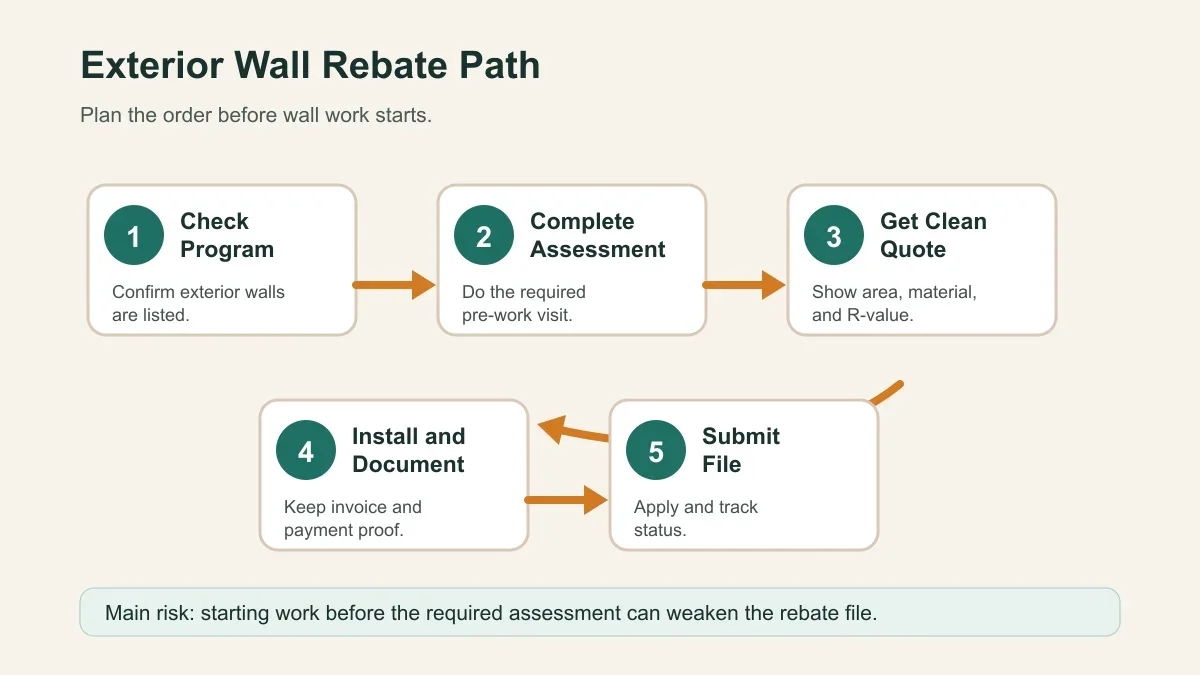
Home Renovation Savings lists exterior wall insulation among the upgrades that require an energy assessment, with exterior wall rebates shown up to $3,600. The program also lists other assessment-stream envelope upgrades, including attic, foundation, exposed floor, and air sealing work.
Think of the exterior wall rebate as support for improving the thermal shell of the home, not as a general siding rebate. Eligible work has to connect to insulation performance, not cosmetic exterior changes.
Why the energy assessment comes first
Start with the assessment because it creates the before-and-after record the program needs. Skipping ahead can turn an otherwise useful upgrade into a non-eligible expense.
During the assessment path, you will usually confirm the current condition of the home, receive upgrade recommendations, complete eligible work, then keep proof for the application. If you are also considering attic work, review the attic insulation R-value tiers so the wall project is not planned in isolation.
Air leakage can also affect comfort after the wall work is done. Pair your planning with the blower door test and air sealing guide and the basement air sealing rebate rules if drafts are part of the complaint.
How to read the wall insulation amount
Do not budget as if every project automatically receives the maximum amount. The listed ceiling tells you the upper limit, while your actual rebate depends on program rules, eligible area, documentation, and whether the work fits the assessment stream.
Exterior wall jobs can be expensive because they may involve siding removal, weather barrier details, insulation depth, and finishing. Honestly, this is where many homeowners get tripped up: they compare only the rebate headline against the contractor price, then miss the paperwork and scope details that decide eligibility.
Before you ask for quotes
Get the order right. First, confirm whether your project needs the Home Renovation Savings assessment stream. Then shortlist contractors who can document insulation materials, wall area, and the exact work being performed.
Use the contractor quote checklist before you compare bids. Once work is done, the payment proof checklist and contractor invoice checklist are useful even when the project is not a window job, because they show the level of invoice detail rebate files often need.
Energy advisor fees can also affect your real payback, so check the energy advisor costs and rebates before you set the budget. If the application has to go through the online system, keep the Home Renovation Savings portal guide handy.
Which upgrades pair well with exterior walls?
Exterior wall insulation is often only one part of the home-envelope story. Basement insulation, attic insulation, and air sealing can sometimes solve comfort problems for less disruption, so compare them before defaulting to wall work.
For below-grade rooms, read the basement insulation assessment requirements. If timing is tight, the attic rebate deadline checks and attic insulation participating contractor checks can help you decide whether attic work belongs in the same plan.
Some homeowners use the assessment visit to compare envelope work with mechanical upgrades. If that is you, review the heat pump water heater assessment path, the heat pump pre-approval checklist, and the participating contractor verification before bundling decisions.
Fuel-switching projects need extra care. The propane to heat pump checks, oil to heat pump checks, electric-heated home heat pump rule, and gas-heated home heat pump rule cover the questions that sit outside a straight insulation project.
Paperwork that can protect your rebate
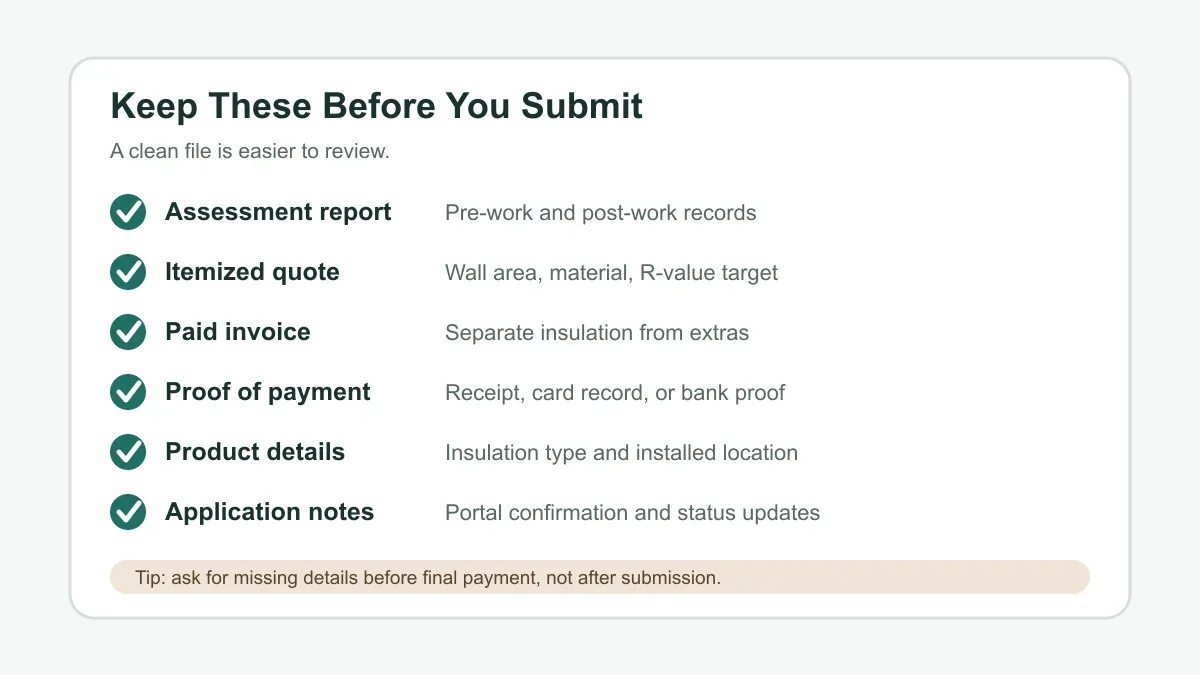
Save the assessment report, quote, paid invoice, product details, photos if your advisor or contractor recommends them, and proof of payment. You want a file that shows what was done, where it was done, and when money changed hands.
After submission, do not assume silence means approval or denial. Track the file and use the rebate cheque status guide if the payment takes longer than expected.
Nearby envelope work can have its own assessment rules. If you are replacing windows or doors at the same time, check the window and door assessment rules before combining scopes on one contract.
Quick Checklist
- Confirm exterior wall insulation is still listed under the current assessment-required upgrades.
- Book the energy assessment before starting eligible wall work.
- Ask quotes to show wall area, insulation type, R-value target, and itemized costs.
- Separate rebate-eligible insulation work from cosmetic siding or repair work.
- Keep assessment, invoice, payment proof, and product details in one folder.
- Compare wall work with attic, basement, and air sealing upgrades before committing.
- Check the official program page again before paying a deposit.
Exterior wall insulation can be a smart comfort upgrade when the wall assembly is genuinely under-insulated, but the rebate only helps if the project is set up in the right order. Start with the official assessment path, make the quote specific, and keep your paperwork boringly complete.
Frequently Asked Questions
Is there an Ontario exterior wall insulation rebate in 2026?
Yes. Home Renovation Savings lists exterior wall insulation as an assessment-required upgrade, with the exterior wall rebate shown up to $3,600. Confirm the current page before applying because program terms can change.
Do I need an energy assessment for exterior wall insulation rebates?
Yes, the exterior wall insulation path is listed under upgrades that require an energy assessment. Do the assessment before the work starts so the project has the right before-and-after record.
Can I get the exterior wall rebate if I already started the work?
Do not count on it. Starting before the required assessment can create eligibility problems, so pause and confirm with the program or your energy advisor before spending more.
Does the rebate cover siding replacement?
No, not as a general siding project. The rebate is tied to eligible insulation improvement, so ask the contractor to separate insulation work from cosmetic or repair costs.
What documents should I keep for the wall insulation rebate?
Keep the assessment report, quote, paid invoice, proof of payment, product details, and any photos or forms requested by the program. Clear records make the application easier to review.
Official sources: Energy assessment required upgrades · Home Efficiency Rebate Plus. Check current program pages before applying.