Insulation
Basement Insulation Rebates in Ontario: Is an Assessment Required in 2026?
Ontario basement insulation rebate assessment required 2026? See when to book the audit, two-upgrade rule, basement limits, and paperwork.
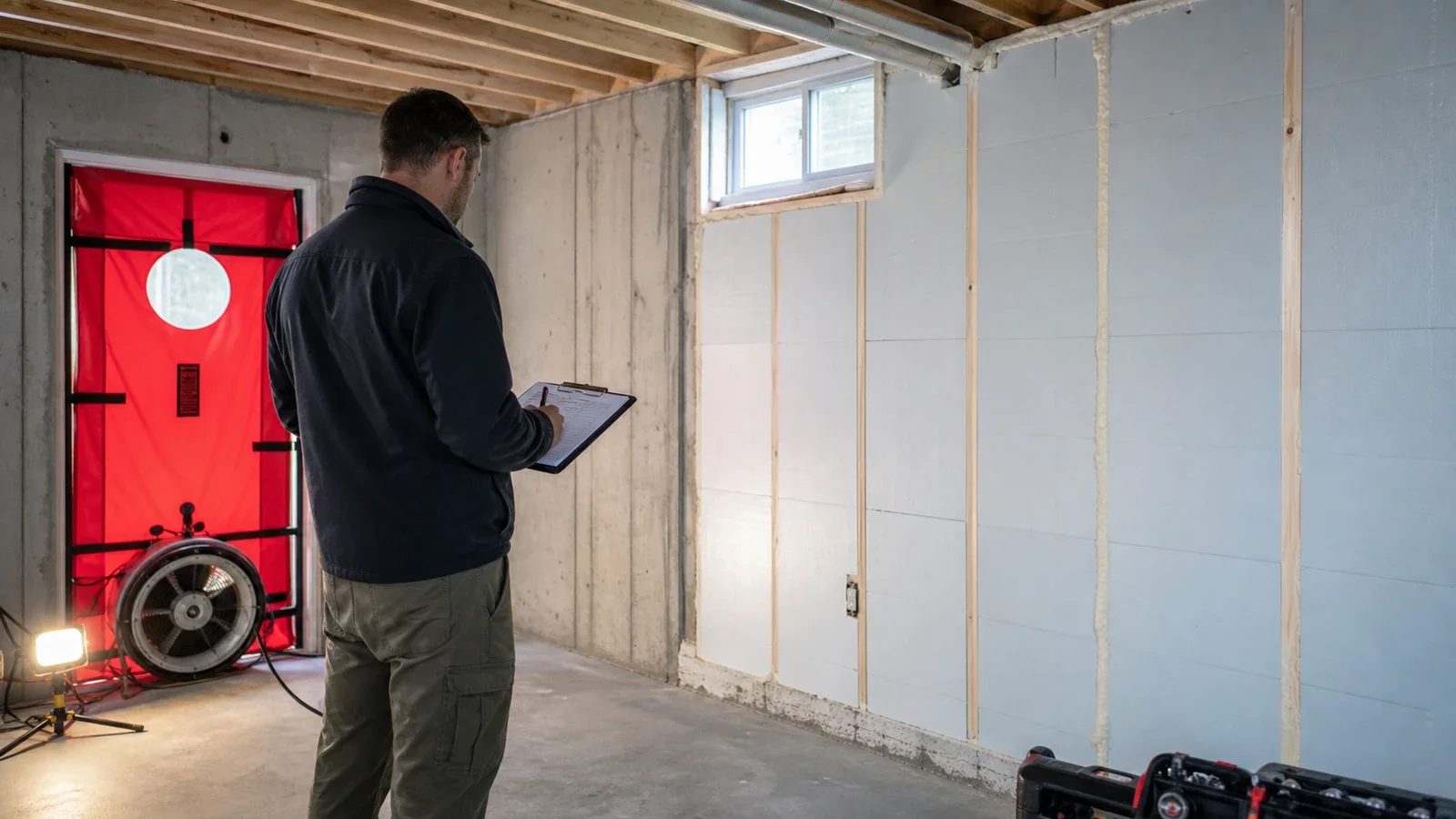
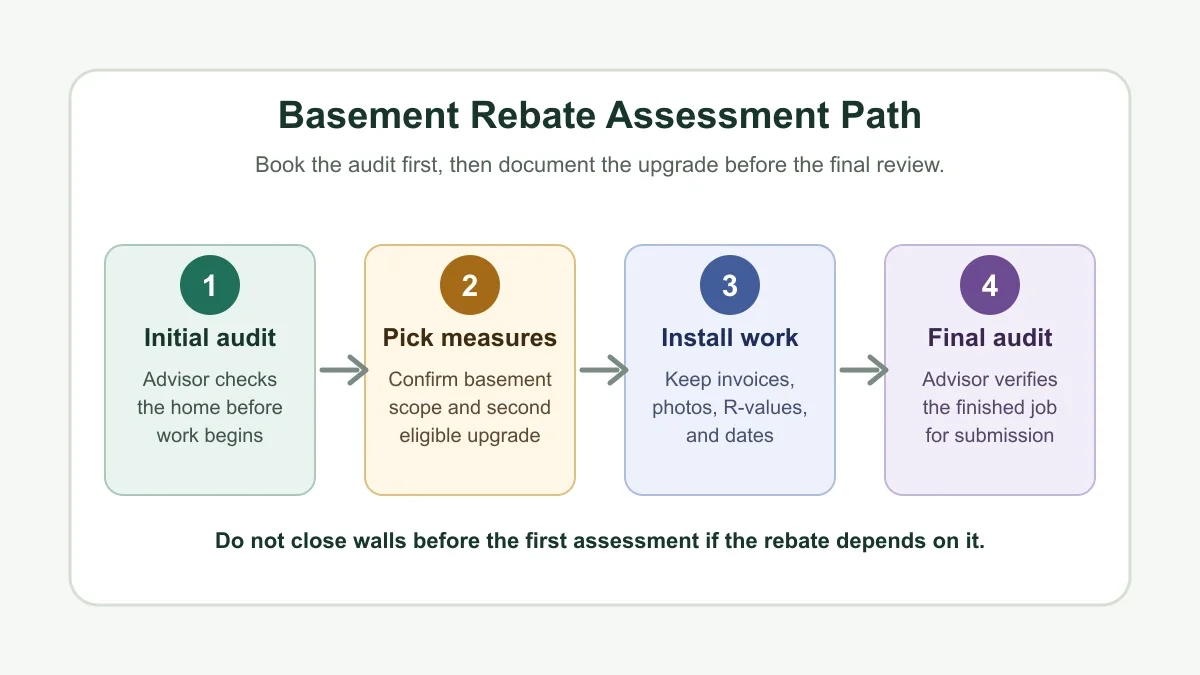
Short answer: if you are asking whether an Ontario basement insulation rebate assessment required 2026 rule applies, assume yes for the Home Renovation Savings assessment stream. Basement and foundation insulation sit in the group of upgrades that must start with an initial home energy assessment, then a follow-up assessment after the work is done.
That ordering matters more than the rebate amount. Book the assessment before insulation starts, keep the advisor's report, and confirm that your basement work will count toward the program before you frame, spray, board, or close the wall.
| What you see | Likely cause | First move |
|---|---|---|
| You want to insulate basement walls | Foundation insulation is in the assessment-required stream | Book the initial home energy assessment before work begins |
| A contractor says the audit can wait | They may be thinking of a no-assessment rebate path | Pause and verify the exact measure with the program page |
| You only plan one basement upgrade | The assessment stream usually requires at least two eligible upgrades | Ask the advisor what second measure makes sense |
| The basement is already partly finished | Hidden assemblies can be hard to document after the fact | Photograph existing conditions before materials arrive |
| You rent out the home | The owner, not the tenant, applies | Have the owner handle the assessment and rebate file |
What the Assessment Rule Means
Basement insulation is not treated like a quick coupon at the cash register. Under the assessment-required path, the program uses a registered energy advisor to document the home before the retrofit, recommend upgrades, and confirm the completed work afterward.
For a basement, that can include basement walls, foundation headers, and in some cases slab-related work. The exact eligible combination matters because program rules can count different basement measures differently when deciding whether you completed one or two qualified upgrades.
Why Basements Get Tricky
Basements look simple until the rebate paperwork starts. A poured wall, a framed wall, a rim joist area, a crawl space transition, and a slab edge can all raise different questions.
Finished basements add another layer. If the advisor cannot see existing conditions, or if the contractor cannot document installed R-values clearly, the claim becomes harder to support.
Think about the rebate file before the first bag of insulation shows up. Photos, invoices, product labels, contractor notes, and the advisor's report should tell the same story.
The Basic 2026 Path
- Schedule the initial assessment. Use the official assessment-required program route to connect with a service organization and registered energy advisor.
- Review the upgrade report. Confirm that basement or foundation insulation is recommended and ask whether it counts as one qualified measure or part of a two-measure plan.
- Choose at least two eligible upgrades if required. Common pairings include basement insulation with air sealing, attic work, windows, doors, or another eligible insulation measure.
- Use proper documentation. Keep invoices, product data, photos, dates, and contractor details in one folder.
- Book the follow-up assessment. The same assessment file has to close the loop after installation.
Official program wording says the assessment-required upgrades start with an initial assessment, then at least two energy-saving upgrades, then a follow-up assessment before rebates are issued. That is the path to build around.
How Much Can Basement Insulation Qualify For?
Home Renovation Savings lists foundation insulation in the assessment-required stream, with rebates up to $2,300. The detailed eligibility PDF is more specific: combinations involving basement walls, foundation headers, and basement slabs can have different maximums and may be treated as one or two qualified measures depending on what is installed.
Do not treat the top number as a quote. Semi-detached and end-unit row houses may not qualify for the maximum, and some measures are prorated by insulated area.
Assessment Required vs No-Assessment Rebates
Ontario homeowners can get confused because the same program also has no-assessment rebates. Some heat pumps, solar panels, smart thermostats, appliances, and standalone attic insulation offers can follow a different route.
Basement insulation is different. If the work is foundation or basement-wall insulation under the assessment stream, the audit is part of the claim, not an optional add-on.
Already comparing other upgrades? Use the home energy assessment cost guide to judge whether the audit pays off, then check the Home Renovation Savings application portal before you submit documents.
Contractor and Paperwork Checks
Most rebate problems are not dramatic. They are small mismatches: the invoice says one thing, the quote says another, and the photos do not show the area that was insulated.
Before you sign, ask the contractor to confirm the planned R-value, the square footage, the product type, and whether the work is basement wall, foundation header, slab, crawl space, or a mix. Keep the advisor in the loop if the scope changes.
For invoice habits, the window rebate invoice checklist is useful even outside window projects because it shows the kind of detail rebate files need. If the basement job includes air leaks, read the Ontario air sealing rebate guide before the blower door test is repeated.
Good Upgrade Pairings for a Basement Project
A basement insulation job often pairs well with air sealing because rim joists, penetrations, and foundation transitions leak more air than homeowners expect. Attic insulation can also make sense if the advisor flags heat loss at the top and bottom of the house.
Major mechanical upgrades need more planning. If you are also moving away from propane or oil, compare the propane-to-heat-pump eligibility checks and the oil-to-heat-pump rebate checks. Electrically heated and gas-heated homes also have different heat pump rebate rules, covered in the electric-heated home heat pump rule and the gas-heated home heat pump rule.
If you want the deeper planning list, keep the heat pump pre-approval checklist, participating heat pump contractor list, cold climate heat pump rebate guide, ground source heat pump planning guide, and heat pump water heater eligibility guide nearby.
What to Confirm Before Work Starts
Ask three direct questions before the basement is closed up. Did the initial assessment happen before the work? Does the advisor's report support this scope? Will the finished job count toward the required number of eligible upgrades?
Then check timing. Program pages and rebate amounts can change, and deadlines matter. The Home Renovation Savings deadline guide and attic insulation deadline guide are worth reading if you are trying to coordinate more than one project.
For adjacent work, review the attic insulation participating contractor guide, basement wall insulation rebate guide, appliance rebate basics, and solar rebate questions. And if anyone pressures you by phone or at the door, read the rebate scam warning before sharing account details.
Quick Checklist
- Book the initial home energy assessment before basement insulation work starts.
- Confirm whether your basement scope counts as one qualified measure or part of a two-measure plan.
- Ask for written R-values, product details, insulated area, and installation dates.
- Take clear before, during, and after photos, especially before walls are closed.
- Keep the quote, final invoice, advisor report, and payment proof together.
- Book the follow-up assessment after installation and before assuming the claim is complete.
- Check current official program pages before applying, especially if your project runs close to a deadline.
Bottom line: basement insulation can be a strong Ontario rebate project in 2026, but only if the assessment comes first and the paperwork matches the eligible measure. Treat the audit as the first step in the project, not as an afterthought.
Official sources: Home Renovation Savings assessment-required upgrades · Home Renovation Savings additional eligibility requirements. Check current program pages before applying.
Frequently Asked Questions
do i need a home energy assessment for basement insulation rebate ontario?
Yes, if you are using the Home Renovation Savings assessment-required path for basement, foundation, or related insulation work. Book the initial assessment before work begins.
can i start basement insulation before the rebate assessment?
Do not start if you want the assessment-required rebate. Work completed before the initial assessment can put the claim at risk because the advisor has to document the home first.
does basement insulation count as two upgrades?
Sometimes, but not automatically. The detailed rules treat different combinations, such as basement walls, foundation headers, and slabs, differently, so confirm the count with the advisor before relying on it.
how much is the ontario basement insulation rebate in 2026?
Foundation insulation is listed at up to $2,300 in the assessment-required stream, but the actual amount depends on the eligible area, housing type, installed measures, and current program rules.
who applies if the house has tenants?
The owner applies. Tenants can benefit from comfort improvements, but the rebate file and assessment process belong with the homeowner.