Insulation
Ontario Attic Insulation Rebates in 2026: How R-Value Tiers Work
Ontario attic insulation R value rebate 2026: see R-50 tiers, assessment timing, contractor checks, and paperwork before you book.
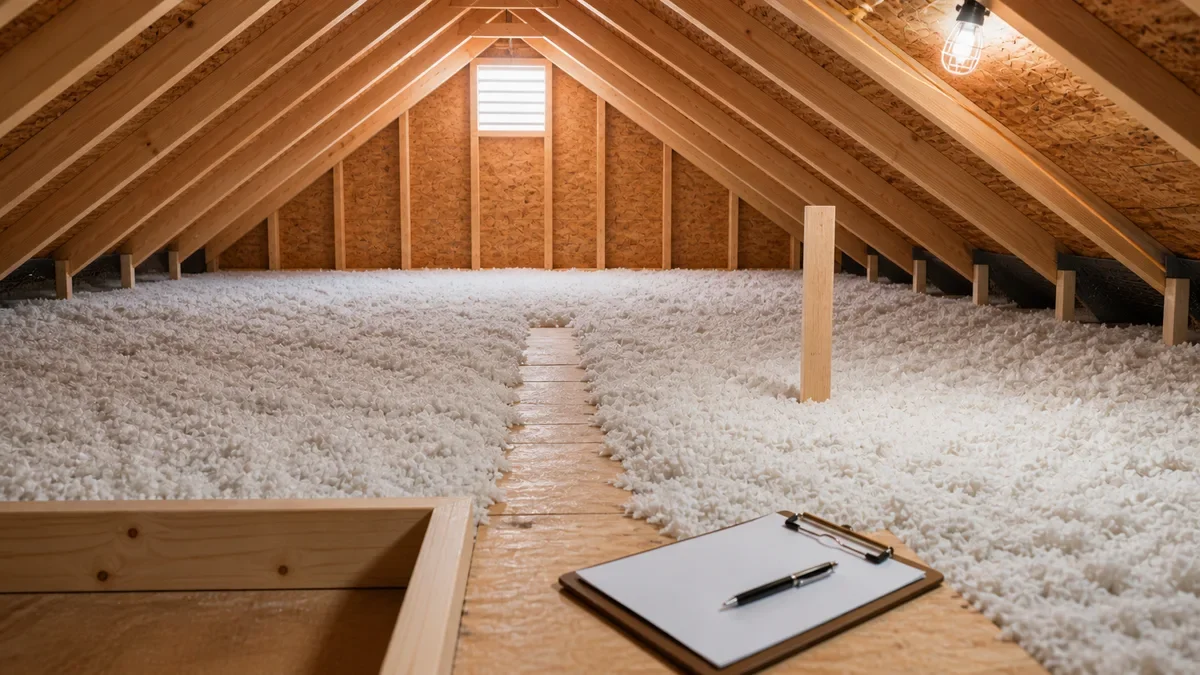
If you are searching for Ontario attic insulation R value rebate 2026, the main number to know is R-50. Under the current Home Renovation Savings attic insulation listing, the rebate depends on your existing attic R-value and whether the finished attic reaches at least R-50.
That sounds simple until you are standing under a hatch with old blown-in insulation, a contractor quote, and a deadline in the back of your mind. Start by proving the existing R-value, then plan the upgrade and paperwork around the correct tier.
| What you see | Likely cause | First move |
|---|---|---|
| Thin, patchy insulation near the hatch | Older attic may be at R-12 or lower in spots | Ask for a measured starting R-value before quoting the rebate |
| Contractor says every attic gets $1,500 | They may be ignoring the starting R-value tiers | Check whether your attic starts at R-12 or less, over R-12 to R-25, or over R-25 to R-35 |
| Quote says "top up to code" only | The scope may not confirm R-50 or rebate wording | Request the final target R-value and product depth in writing |
| Attic has bath fan leaks or dark staining | Air leakage or moisture may be reducing performance | Fix air sealing and ventilation problems before adding insulation |
| You already booked other upgrades | The attic work may need to fit a broader HRS file | Confirm assessment, contractor, and submission timing before work starts |
Ontario attic insulation R value rebate 2026: the R-50 tiers
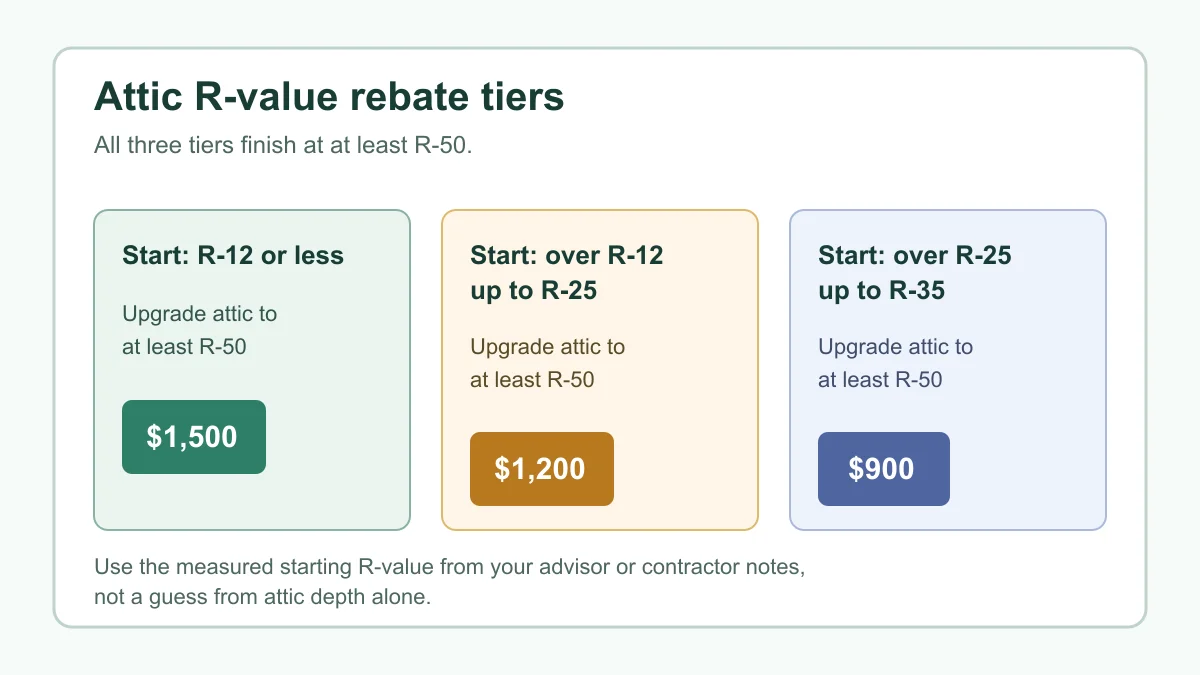
Home Renovation Savings currently lists three attic insulation rebate tiers for upgrading to at least R-50. If the attic starts at R-12 or less, the listed rebate is up to $1,500. If it starts above R-12 and up to R-25, the listed rebate is up to $1,200. If it starts above R-25 and up to R-35, the listed rebate is up to $900.
Notice what all three have in common. The finish line is not "add some insulation." It is at least R-50, and the starting point affects the amount.
What R-Value Means for This Rebate
R-value measures resistance to heat flow. Higher R-value generally means better thermal resistance, but rebate reviewers care about the documented starting and finished values, not just comfort claims.
For homeowners, the practical question is this: can the contractor or advisor show where the attic starts and how the finished work reaches R-50? If the answer is vague, the quote is not ready for a rebate file.
Assessment Path or Attic-Only Path?
Ontario attic insulation can appear in more than one Home Renovation Savings context, which is where confusion starts. The assessment-required page lists attic insulation beside other measures and uses the R-50 tiers. Homeowners may also see attic-specific program pages or contractor-led offers.
Before signing, ask which path your job is using. If your project is bundled with other upgrades, compare the Ontario energy advisor cost guide and the window and door assessment guide so you understand whether an audit is part of the file.
Already planning a basement job too? The basement insulation assessment guide is useful because basement and attic measures can have different documentation traps.
How to Prove the Starting R-Value
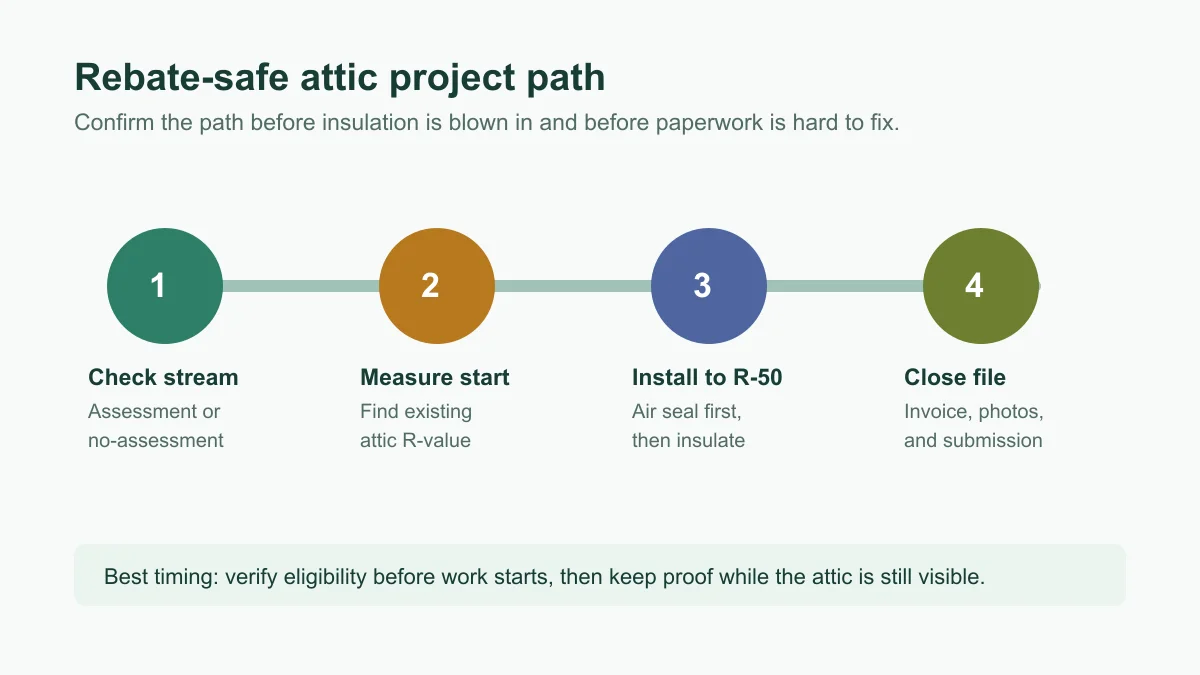
Start with a simple attic check, then get the finding in writing. A good file usually has the existing insulation type, approximate depth, areas measured, access limitations, planned top-up material, and the final R-50 target.
Ask for photos before work starts. They should show the attic hatch area, low spots, existing batts or blown material, baffles, obvious gaps, and any areas the crew cannot reach. Those photos are not glamorous, but they can save the claim if the scope is questioned later.
Air Sealing Comes Before More Insulation
Insulation slows heat flow. Air leaks move warm, moist indoor air into cold attic spaces, and that can create comfort problems, frost, staining, or wet insulation.
Seal the usual leakage points before the attic is buried: top plates, plumbing stacks, wiring holes, bath fan penetrations, pot lights rated for contact, attic hatches, chimney chases, and dropped ceilings. If your project includes blower-door work, the Ontario air sealing rebate guide explains where that test fits.
For payment paperwork later, keep the Home Renovation Savings payment proof checklist nearby. It is easier to collect documents while the contractor is still engaged than to chase them after the crew leaves.
Contractor Checks Before You Book
Attic insulation is often sold as a quick top-up, but the rebate version needs more discipline. Ask whether the installer is participating in the right program path, whether they will document existing and final R-values, and whether the quote separates air sealing, ventilation fixes, insulation, removal, and cleanup.
Use the Ontario rebate contractor quote checklist before you sign. If the job is contractor-led, the attic insulation participating contractor guide can help you verify the name and role before you pay a deposit.
Watch for pressure tactics. Any call, text, or door-to-door claim about a guaranteed rebate should be checked against the Home Renovation Savings scam warning before you share account details.
Timing, Deadline, and Submission Details
Program amounts and rules can change, so timing matters. If you are waiting until later in 2026, read the attic insulation rebate deadline guide and the broader Home Renovation Savings deadline guide before assuming there is plenty of time.
After the job, invoices should match the scope. The same habit used in the Ontario window rebate invoice checklist applies here: address, dates, contractor details, product information, quantities, and clear work descriptions should all line up.
If you submit through the program portal or later need to track payment, use the Home Renovation Savings application portal guide and the rebate cheque status guide to keep the paper trail clean.
When Attic Insulation Is Part of a Bigger Retrofit
Some homes should not stop at the attic. If your advisor flags an old water heater, weak basement insulation, or a heating system change, the attic work may be one piece of a bigger plan.
For water heating, compare the heat pump water heater assessment path. For full heating conversions, read the propane-to-heat-pump guide, oil-to-heat-pump guide, and heat pump pre-approval checklist before assuming the attic rebate and heating rebate follow the same steps.
Gas-heated and electrically heated homes can also face different heat pump math. The gas-heated home heat pump rule, electrically heated home heat pump rule, and participating heat pump contractor list are worth checking if your insulation quote is part of a larger renovation plan.
Quick Checklist
- Confirm the exact program path before work starts.
- Measure and document the existing attic R-value.
- Make sure the finished scope reaches at least R-50.
- Match the rebate tier to the starting R-value, not the sales pitch.
- Air seal leaks and fix ventilation concerns before adding insulation.
- Keep before, during, and after photos with the quote and invoice.
- Check current official pages again before signing or submitting.
Bottom line: attic insulation can be a strong Ontario rebate project in 2026, especially if the attic starts low and the upgrade reaches R-50. Treat the R-value tier as a documentation question first and a rebate amount second.
Official sources: Home Renovation Savings assessment-required upgrades and Enbridge Gas insulation and rebate overview. Check live program pages before applying because rules, amounts, and paths can change.
Frequently Asked Questions
what R value do I need for Ontario attic insulation rebate?
The current Home Renovation Savings attic insulation tiers require the attic to be increased to at least R-50. Your starting R-value affects whether the listed amount is up to $1,500, $1,200, or $900.
how much is the attic insulation rebate in Ontario in 2026?
Home Renovation Savings currently lists attic insulation at up to $1,500 from R-12 or less to at least R-50, up to $1,200 from over R-12 to R-25, and up to $900 from over R-25 to R-35.
does attic insulation rebate Ontario require an energy assessment?
It depends on the program path being used. Confirm whether your job is under the assessment-required stream or an attic-specific no-assessment route before any work starts.
can I get the rebate if my attic is already R-40?
Based on the current public tiers, the listed attic rebate ranges stop at starting values above R-25 and up to R-35. If your attic is already around R-40, ask the program or contractor to confirm before counting on a rebate.
should I air seal before adding attic insulation?
Yes, in most homes. Air sealing before insulation helps stop warm indoor air from leaking into the attic and makes the new insulation perform closer to its intended R-value.
what documents should I keep for an attic insulation rebate?
Keep the quote, invoice, proof of payment, product details, starting and final R-value notes, photos, contractor information, and any advisor or program emails tied to the file.