Insulation
Ontario Air Sealing Rebates in 2026: Where the Blower Door Test Fits
Ontario air sealing rebate blower door test 2026: when to book assessments, seal leaks, document work, and claim rebates.
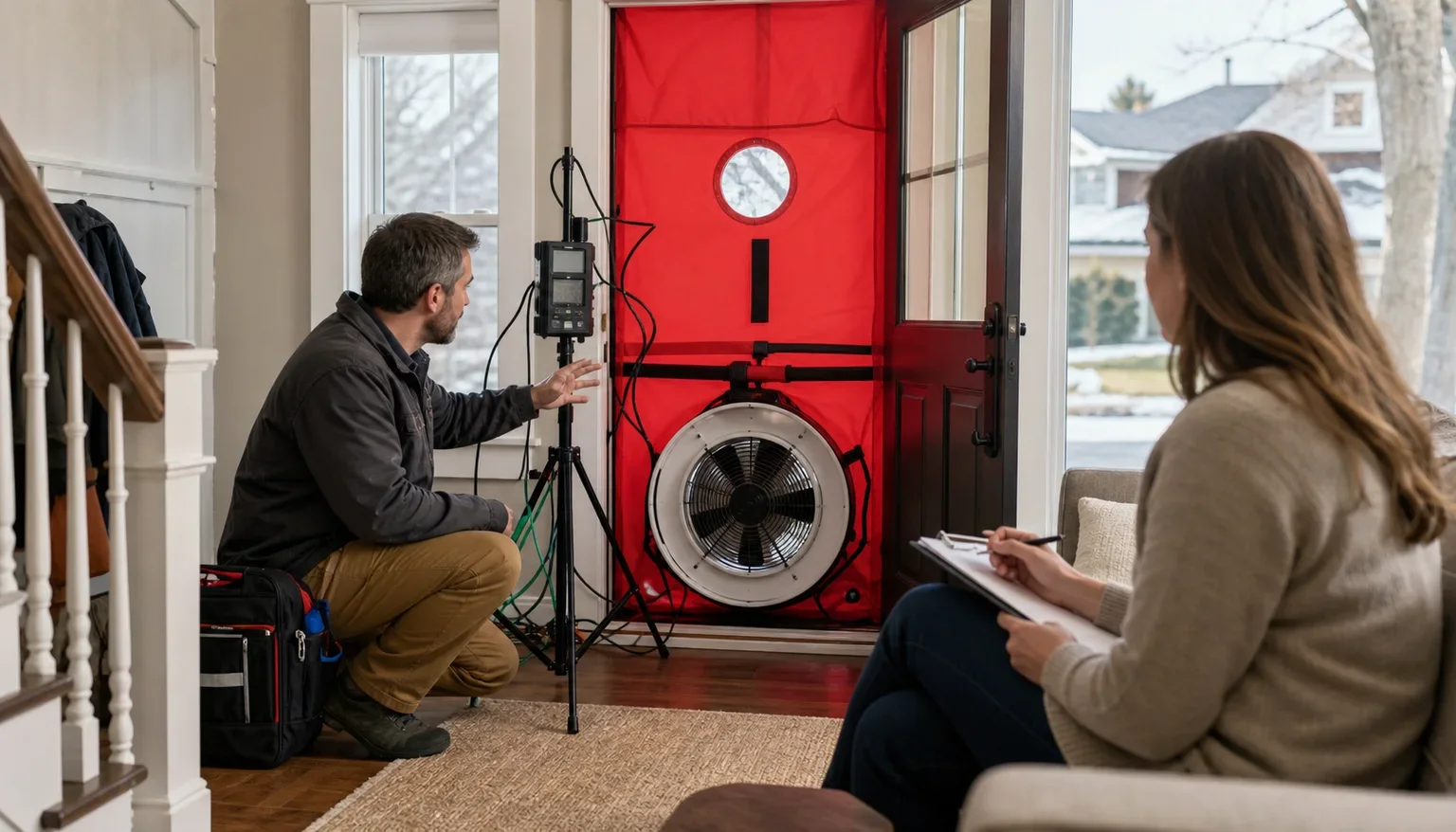
If you searched for Ontario air sealing rebate blower door test 2026, you are probably trying to answer one practical question: does the test happen before the caulking and foam, after it, or both? For Ontario homeowners using the assessment-required Home Renovation Savings path, the blower door test is part of the energy assessment process that documents how leaky the house is before work and what changed after the upgrades.
Air sealing is not glamorous work. It is rim joists, attic penetrations, basement cracks, old weatherstripping, plumbing chases, and the little gaps that make rooms feel cold even after you turn up the thermostat. The rebate only makes sense if the timing is right, so treat the test as part of the claim file, not an optional comfort check.
| What you see | Likely cause | First move |
|---|---|---|
| Drafts near trim, outlets, or attic hatches | Small bypasses are pulling outdoor air into the house | Book the pre-work assessment before sealing |
| A contractor offers to seal first and test later | The project may lose the baseline needed for the rebate file | Ask whether a registered energy advisor has completed the initial test |
| Rooms stay cold after attic insulation | Air leakage may be bypassing the insulation layer | Check air sealing alongside the insulation scope |
| Your quote only says "draft proofing" | The work scope may be too vague for documentation | Request room-by-room or area-by-area details |
| The final test is delayed | The advisor may not have everything needed to close the file | Keep invoices, photos, and upgrade records ready |
Ontario air sealing rebate blower door test 2026: what it decides
A blower door test depressurizes the house so the energy advisor can measure air leakage and find the obvious leak paths. In plain terms, it shows how much uncontrolled air is moving through the building shell.
For a rebate claim, the first test matters because it creates the baseline. The follow-up assessment then helps confirm the eligible work was completed and gives the program a final file to process. Skip the first step and you may have a nicer, tighter house, but a weaker rebate claim.
How the assessment path works
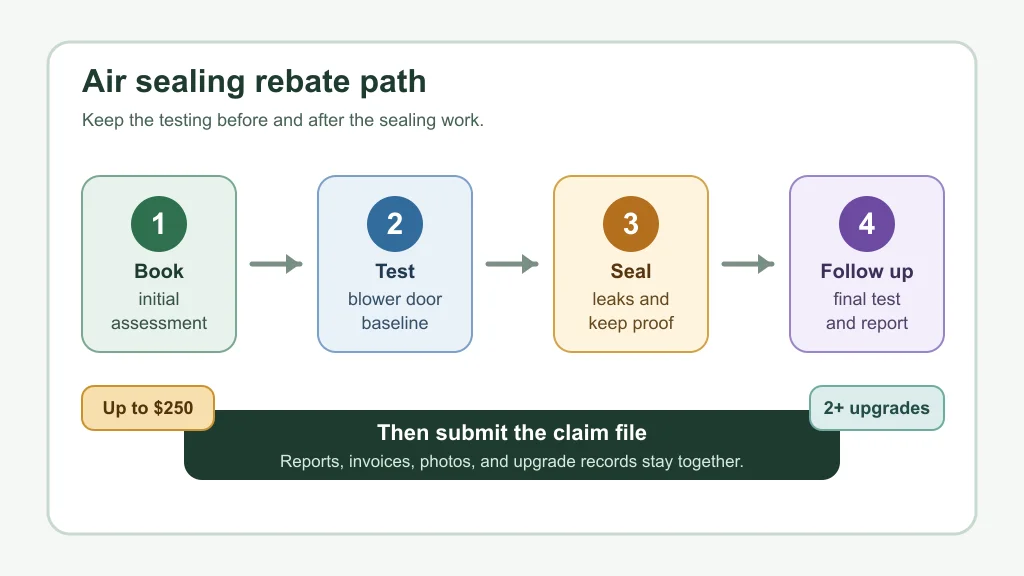
Start with the home energy assessment, not the contractor's caulking gun. A registered energy advisor reviews the house, runs diagnostic testing, and gives you a renovation upgrade report that shows what the home needs.
From there, you choose the work. Air sealing can sit beside insulation, windows, doors, heat pump water heaters, or other eligible measures, but the bundle rules matter. For many assessment-required upgrades, the program expects at least two qualifying upgrades before the file can move through successfully.
- Book the initial assessment. Ask the service organization whether the blower door test is included and what access they need.
- Read the upgrade report. Look for air sealing targets, insulation priorities, and any warnings about ventilation or combustion appliances.
- Complete the selected upgrades. Keep invoices detailed enough to show what was sealed and where the work happened.
- Schedule the follow-up assessment. The advisor documents the completed work and runs the final checks needed for the file.
- Keep the rebate trail clean. Save the report, invoices, photos, and emails in one folder until payment is resolved.
What usually gets sealed
Most useful air sealing work happens at the pressure boundary, not just around the most obvious window draft. Attic bypasses, pot lights, plumbing stacks, bath fan penetrations, basement rim joists, sill plates, wiring holes, fireplace surrounds, and old door thresholds can all leak more than homeowners expect.
Pairing air sealing with insulation is often the cleaner plan because the same access points are open. If you are already reviewing the attic insulation deadline guide, also check the attic insulation contractor guide so the sequencing does not get messy.
Foundation areas deserve the same attention. Before finishing a basement, compare the basement wall insulation rebate guide with the crawl space insulation rebate guide. If exterior work is already planned, the exterior wall insulation rebate guide can help you decide whether air sealing should be part of a larger envelope job.
What the rebate amount means
Current public program material lists air sealing at up to $250. That does not mean every tube of sealant or every hour of labour is automatically reimbursed. It means air sealing is one eligible measure inside a larger ruleset, with final eligibility based on the program path, the home, the work, and the submitted file.
Honestly, this is where homeowners get tripped up. The air sealing rebate can be smaller than the assessment cost or the insulation rebate, but it can still be worth doing because it improves comfort and helps the rest of the envelope work perform properly.
Before you book the blower door test
Gather the boring details early. They save time later.
- Your utility account and primary heating type.
- Photos of existing insulation, attic access, basement rim joists, and problem rooms.
- Any recent renovation permits or invoices that affect walls, ceilings, windows, doors, or mechanical systems.
- A list of comfort complaints, including cold floors, musty crawl spaces, and rooms that never hold temperature.
- Contractor quotes that separate insulation, air sealing, windows, doors, and mechanical work.
Energy assessments are also where homeowners discover that air sealing is only one part of the plan. If the advisor flags a heat pump as a better next move, use the Ontario heat pump rebate pre-approval checklist before you sign anything. Homes moving away from propane should read the propane-to-heat-pump rebate checks, while oil-heated homes should start with the oil-to-heat-pump rebate planning guide.
How air sealing fits with other 2026 upgrades
Air sealing is usually an envelope upgrade, but it affects mechanical decisions too. A tighter home may need different ventilation planning, and it can change how heating and cooling upgrades feel after installation.
If a contractor starts discussing heat pump sizing, verify the company through the participating contractor list guide. Electrically heated homes should compare the electric-heated home heat pump rebate rule; gas-heated homes should read the gas-heated home heat pump rebate rule. For bigger systems, keep the cold climate heat pump guide, ground source heat pump guide, and heat pump water heater eligibility guide separate so the measures do not blur together.
Other rebate streams have their own timing. Use the Home Renovation Savings deadline guide and the home energy assessment cost guide before deciding whether to bundle air sealing with windows, appliances, solar, or storage. The Ontario appliance rebate basics, solar panel rebate questions, and solar battery pre-approval guide are separate planning lanes.
Red flags before you pay a deposit
Be careful with any pitch that turns the blower door test into a formality. A real assessment should create a usable report, not just a quick visit that rubber-stamps a job already sold to you.
- The contractor tells you the initial assessment can happen after sealing.
- The quote does not say where air sealing will be done.
- The salesperson promises the full rebate without checking your home or program path.
- You are told to ignore the follow-up assessment because the work is "obviously eligible."
- The company pressures you through calls, texts, or door-to-door claims. If that happens, read the Home Renovation Savings scam warning before sharing personal information.
Quick Checklist
- Book the initial home energy assessment before air sealing starts.
- Confirm whether the blower door test is part of both the initial and follow-up assessment.
- Read the renovation upgrade report before choosing the work scope.
- Bundle air sealing with at least one other qualifying upgrade when the assessment path requires it.
- Ask for a quote that separates air sealing areas, materials, and labour from insulation.
- Save before-and-after photos, invoices, reports, and advisor emails.
- Schedule the follow-up assessment before the file goes stale.
Bottom line
Air sealing is a small rebate line with a big comfort impact. The blower door test is what keeps the project honest: it finds the leaks, gives the advisor a baseline, and helps close the file after the work is done. Slow down enough to get the first assessment before work starts, then keep every document until the rebate is paid.
Frequently Asked Questions
do you need a blower door test for Ontario air sealing rebate?
For the assessment-required Home Renovation Savings path, expect blower door testing to be part of the home energy assessment process. The initial assessment creates the baseline before work starts, and the follow-up assessment helps document the completed upgrades.
how much is the Ontario air sealing rebate in 2026?
Current public program material lists air sealing at up to $250. Final eligibility depends on the program path, the home, the completed work, and the submitted documentation.
can I do air sealing before the energy assessment?
Do not do that if you want to use the assessment-required rebate path. Complete the initial assessment first so the advisor can document the baseline condition of the home.
what does a blower door test show?
A blower door test measures how much air leaks through the building shell and helps locate problem areas such as attic bypasses, rim joists, penetrations, doors, hatches, and old trim gaps.
is air sealing worth it if the rebate is small?
Often, yes. The rebate may be modest, but better air sealing can reduce drafts, make insulation perform better, and improve comfort in rooms that are hard to heat or cool.
Official sources: Home energy assessment required upgrades · Home Renovation Savings Program. Check current program pages before applying.