Rebates
Ontario Energy Advisor Costs and Rebates in 2026: What Homeowners Should Expect
Ontario energy advisor cost rebate 2026 guide: learn what the $600 assessment rebate covers, when audits are required, and what to confirm.

If you are searching for Ontario energy advisor cost rebate 2026, the number to know is the official $600 assessment rebate under the Home Renovation Savings assessment-required path. It is meant to offset the initial and follow-up home energy assessments after you complete the program, not to erase every upfront cost on booking day.
That timing matters. You may still pay the registered energy advisor or service organization before the rebate file is finished, so the practical question is whether the assessment unlocks enough eligible upgrades to justify the cash flow, paperwork, and follow-up visit.
| What you see | Likely cause | First move |
|---|---|---|
| The advisor quote is higher than $600 | The rebate is an offset, not a guaranteed price cap | Ask for the total for both visits, including tax and travel |
| A contractor says the audit is optional | They may be talking about a no-assessment stream | Match the upgrade to the current Home Renovation Savings category |
| You already started the work | The initial assessment may not be in place first | Pause and ask the service organization before spending more |
| The advisor mentions two upgrades | The assessment-required path normally expects a bundle | Price the second upgrade before booking the job |
| You cannot find the follow-up fee | The quote may only cover the first assessment | Get the full assessment package cost in writing |
Ontario energy advisor cost rebate 2026: the short answer
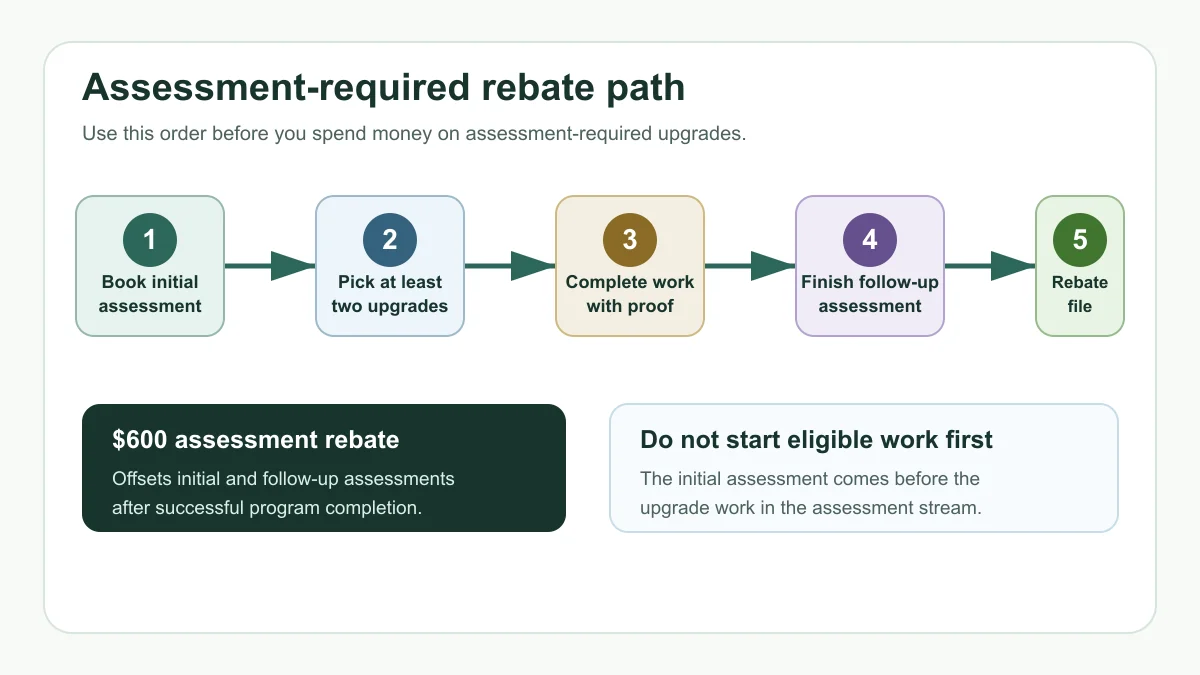
Plan for the advisor cost as an upfront project expense, then treat the $600 as a rebate you receive only after the assessment-required program file is successfully completed. The official Home Renovation Savings assessment page says homeowners start with an initial home energy assessment, complete recommended upgrades, book a follow-up assessment, and then receive the assessment rebate after program completion.
Put another way, the advisor visit is not just a standalone audit. It is the entry point for upgrades such as insulation, air sealing, windows, doors, and other measures that need an assessment record.
Why the advisor fee can still be worth it
Book the assessment when the audit opens the door to upgrades you were already considering. If your attic, basement, windows, doors, or air sealing work is on the table, the advisor report can help organize the project and keep the rebate sequence clean.
Skip the guesswork before you sign a contractor agreement. For window and door planning, compare the assessment sequence in our guide to Ontario window and door rebates that require an energy assessment. For envelope work below grade, our basement insulation assessment guide explains why the audit record can matter before the walls are closed up.
Air sealing is another common reason to pay attention. A blower door result can shape the work plan, so keep our Ontario air sealing and blower door test guide nearby if draft reduction is part of the job.
The order matters more than the invoice
Start with the assessment before eligible work begins. Then use the advisor's report to choose the right upgrades, collect contractor proof, complete the work, and schedule the follow-up visit.
Miss that order and the rebate conversation gets messy fast. A homeowner can have a good contractor, good products, and a real energy problem, yet still lose the clean program path because the initial assessment happened too late.
What to ask before booking an energy advisor
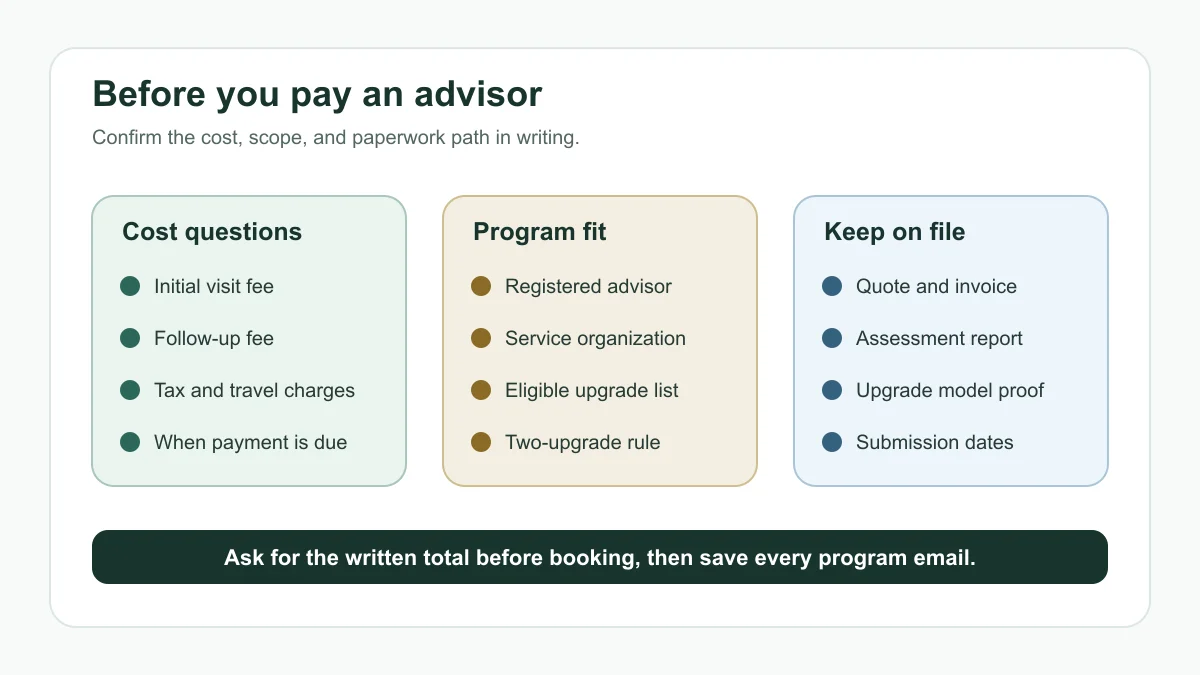
Ask the advisor or service organization four direct questions. What is the full cost for both assessments? Is the advisor registered for the program path you plan to use? Which upgrades in your home are likely to qualify? What documents will you need from each contractor?
Written answers are better than a quick phone promise. Save the quote, the advisor's service organization name, the assessment date, and the report reference number with your project paperwork.
If windows or doors are involved, use the Ontario window rebate invoice checklist for contractors before installation. Product names, opening counts, and invoice wording are easier to fix before the crew has packed up.
Where heat pumps fit if you are comparing options
Some heat pump incentives use a different path than assessment-required envelope upgrades, so do not copy rules from one stream to another. If you are planning a heat pump, start with our Ontario heat pump rebate pre-approval checklist and verify the participating contractor before you sign.
Fuel type can change the incentive math. Compare the electric-heated home heat pump rebate rule, the gas-heated home heat pump rule, the propane-to-heat-pump eligibility checks, and the oil-to-heat-pump rebate guide before choosing a quote.
Contractor status still matters. Our participating contractor verification guide shows the habit to use for any rebate-led project: confirm the program role first, then compare prices.
Do not ignore deadlines and payment timing
Rebate programs can change, close, or run into high-volume processing periods. If the advisor cost only makes sense because you expect a rebate, check the current application and completion timing before you commit.
For timing pressure, read the Home Renovation Savings deadline guide and the Ontario attic insulation deadline guide. If your file is already complete and you are waiting for money, our rebate cheque status guide explains how to track the approval date rather than the installation date.
Keep your portal records tidy too. The Home Renovation Savings application portal guide can help you keep submissions, advisor documents, and status notes in one place.
How to decide if the assessment pays off
Run the math in three layers. First, list the advisor cost and when you must pay it. Second, list the upgrades the assessment may unlock. Third, subtract only rebates that fit your actual house, product choices, and program sequence.
For a deeper cost comparison, use our home energy assessment cost guide. If your project includes attic work, the attic insulation participating contractor guide can help you avoid a quote that looks cheap but fails the paperwork test.
Other incentives may be outside the advisor path. See our solar panel rebate guide, Ontario appliance rebate basics, and heat pump water heater eligibility guide before bundling unrelated claims into one plan.
Watch for pressure tactics
Be careful with anyone who treats the assessment rebate like a guaranteed discount at the door. A legitimate rebate plan should still leave you with official program pages, a clear service organization, written costs, and a realistic timeline.
Use our Home Renovation Savings scam warning if a caller, texter, or door-to-door salesperson says you must book immediately to keep the rebate. Slow down and verify through official channels.
Quick Checklist
- Ask for the full initial and follow-up assessment cost in writing.
- Confirm the advisor and service organization fit the current program path.
- Book the initial assessment before starting assessment-required work.
- Price at least two eligible upgrades before counting on the rebate.
- Save the advisor report, contractor quotes, invoices, product proof, and emails.
- Schedule the follow-up assessment as soon as eligible work is complete.
- Check official program pages again before applying or signing a contract.
Official sources: Home Renovation Savings assessment-required upgrades · Enbridge Gas rebates and energy conservation. Check current program pages before applying.
Advisor costs are worth a close look because they sit at the front of the rebate process. Get the full fee in writing, confirm the sequence, and only count the $600 assessment rebate once your project can realistically complete the program path.
Frequently Asked Questions
how much does an energy advisor cost in Ontario in 2026?
Costs vary by advisor, service organization, location, and whether the quote includes both the initial and follow-up assessment. Ask for the full amount in writing, then compare it with the official $600 assessment rebate available after successful completion of the assessment-required program path.
is the Ontario energy advisor rebate paid upfront?
No. Treat the advisor fee as an upfront project cost unless your service organization tells you otherwise in writing. The assessment rebate is tied to completing the program sequence, including the follow-up assessment.
do I need an energy advisor for Home Renovation Savings rebates?
You need an advisor for assessment-required upgrades. Some other rebate streams may not use the same process, so match your planned upgrade to the current Home Renovation Savings category before booking or starting work.
does the $600 assessment rebate cover both energy audits?
The official assessment-required page describes the $600 rebate as offsetting the cost of the initial and follow-up home energy assessments after successful program completion. Your actual quote may be higher or lower, so confirm the full package cost.
can I start renovations before the energy assessment?
Do not start assessment-required work before the initial assessment unless the program or service organization confirms your situation in writing. Starting too early can make an otherwise sensible project harder to fit into the rebate sequence.