Solar
How to Get Ontario Solar Battery Pre-Approval Before You Install in 2026
Use this solar battery storage rebate Ontario pre approval 2026 checklist to avoid timing mistakes and missing pre-install forms.
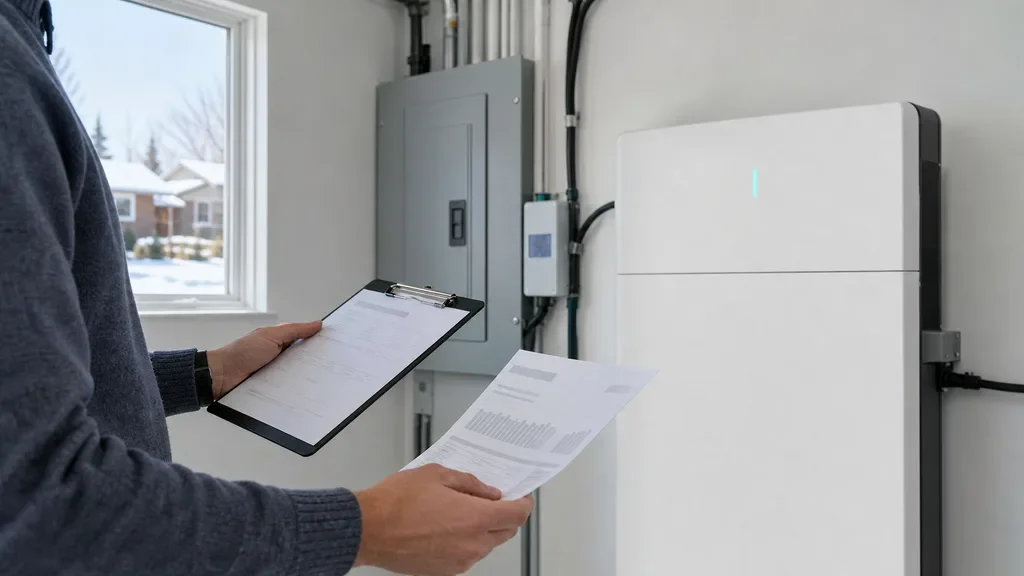
If you are searching for solar battery storage rebate Ontario pre approval 2026, the big thing to understand is timing. The Home Renovation Savings solar stream can be useful, but the paperwork has to come before the purchase, deposit, and installation.
Here is the practical order: confirm the home qualifies, decide whether the rebate path fits better than net metering, get a quote with the right system details, then wait for written pre-approval from the program and your local distribution company before work starts.
| What you see | Likely cause | First move |
|---|---|---|
| Contractor wants a deposit right away | The sales process is moving faster than the rebate process | Ask whether any payment could count as purchase activity before pre-approval |
| Quote mentions net metering | The project may be planned for export instead of load displacement | Clarify the design path before forms are submitted |
| Battery is quoted without new solar | The storage may not match the program stream | Confirm it is paired with a new solar PV system |
| Utility approval is still pending | The local distribution company has not signed off yet | Do not schedule installation until written approvals are in hand |
| Home is served by a non-standard grid connection | Some electricity connections may not qualify | Check the program eligibility page before spending on design work |
What you need before you start
- Proof that you own the home and are responsible for the solar and battery purchase.
- Your local distribution company name and account details.
- A contractor quote that separates solar PV capacity, battery storage capacity, equipment, labour, and taxes.
- A clear answer on whether the project is for Home Renovation Savings load displacement or a net-metering agreement.
- Pre-installation forms, utility connection documents, and a place to save every written approval.
Step 1: Confirm the rebate path fits your home
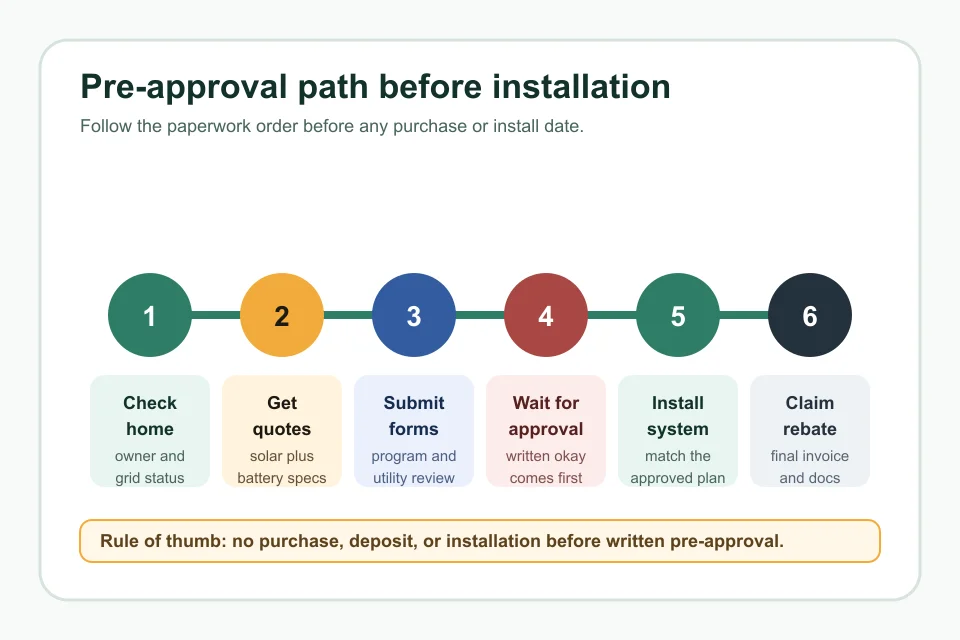
Estimated time: 20 to 45 minutes.
- Check that you are at least 18, own the home, and are the person paying for the purchase and installation.
- Confirm the property type fits the program, such as a detached, semi-detached, row, townhouse, or mobile home on a permanent foundation.
- Make sure the home is connected to the Ontario electricity grid. If your service situation is unusual, check before getting deep into quotes.
- Write down your LDC name because the contractor will need utility connection approval as part of the pre-installation process.
Do this first because eligibility problems are cheaper to find on paper than after you have a signed solar contract.
Step 2: Submit the solar battery storage rebate Ontario pre approval 2026 forms
Estimated time: 2 to 10 business days for gathering documents, plus program and utility review time.
- Ask the contractor for a quote that shows the solar system size in kW and the battery storage size in kWh.
- Check the rebate math against the current program limits: solar panels are listed at up to $5,000 back, and battery energy storage is listed at up to $5,000 back when it qualifies.
- Have the contractor submit the pre-installation form and coordinate the local utility connection approval.
- Save the written pre-approval from the Home Renovation Savings team and the relevant local distribution company before any work starts.
Step 3: Decide between the rebate and net metering
Estimated time: 30 to 60 minutes with your contractor, and longer if the utility needs design clarification.
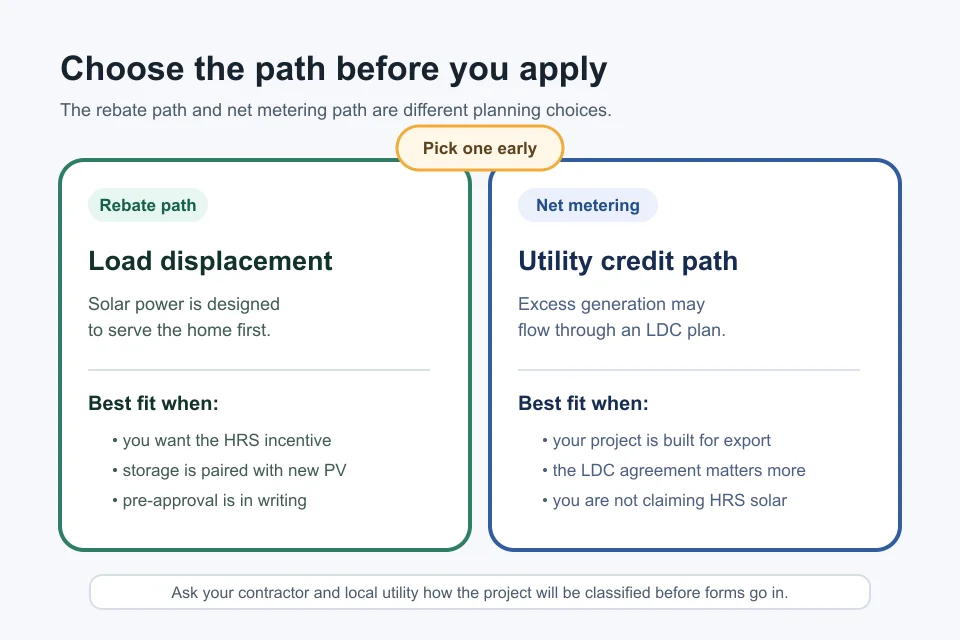
- Ask whether the system is designed mainly for load displacement, meaning the solar power serves the home rather than being built around export credits.
- Compare that with a net-metering plan from your local distribution company.
- Choose the path before the application is submitted because Home Renovation Savings says participants receiving the solar PV and battery storage incentive are not eligible to participate in a net-metering agreement.
- If you are unsure, pause the application and ask the contractor to explain the financial tradeoff in writing.
Honestly, this is where people usually get turned around. The better path depends on system design, household usage, local utility rules, and whether the upfront rebate matters more than net-metering credits.
For more background on that tradeoff, see our guide to Ontario solar rebates and net metering in 2026.
Step 4: Install only after approvals are in hand
Estimated time: 1 to 3 days for many residential installs, with scheduling and inspection time varying by contractor and utility.
- Compare the approved quote against the equipment your contractor plans to install.
- Keep the battery paired with the new solar PV system and sized for the approved design.
- Ask the contractor to document any substitution before it happens, especially if equipment availability changes.
- Collect photos, commissioning documents, permits, inspection records, and the final invoice.
Small changes can create large rebate headaches. If the installed system no longer matches the approved paperwork, get that sorted before the final claim goes in.
Step 5: Submit final documents and track the rebate
Estimated time: 30 to 90 minutes for your file review, plus program processing time after the contractor submits the claim.
- Review the final invoice for the same customer name, address, equipment, and system sizing used in the pre-approval file.
- Make sure the contractor has submitted all required post-installation documents.
- Keep copies of utility approval, final inspection, commissioning notes, and payment records.
- Follow up politely if you do not receive confirmation that the final package was submitted.
Think of the rebate file as a chain. Eligibility, pre-approval, installation, and final paperwork all have to point to the same project.
Related planning guides
Solar and storage decisions often affect the rest of a home upgrade plan. These related guides can help you compare timing, contractor paperwork, and rebate stacking risks: solar battery storage rebate basics, finding Home Renovation Savings participating contractors, assessment versus no-assessment rebate paths, Ontario window and door rebates, the 3-windows-or-1-door rule, rough opening rules for window rebates, Ontario insulation rebate planning, attic insulation R-12 to R-50 rebates, exposed floor insulation rebates, foundation insulation rebate basics, air sealing airtightness targets, flat roof insulation rebates, cathedral ceiling insulation rules, heat pump water heater rebates, heat pump cost and rebate math, Enbridge heat pump rebate basics, smart thermostat rebate options, home EV charger installation costs, and Canada Greener Homes Loan status.
Quick Checklist
- Confirm owner, property, age, and electricity-grid eligibility.
- Ask whether the project is rebate-based load displacement or net metering.
- Get solar kW, battery kWh, equipment, labour, and tax details in the quote.
- Have the contractor submit the pre-installation form before work starts.
- Wait for written program and local utility approval.
- Keep the installed equipment aligned with the approved plan.
- Save final invoices, photos, inspection records, and submission confirmations.
Official sources
Program details can change. Check the current pages before applying: Home Renovation Savings solar and battery storage rebates and Save on Energy home programs.
Frequently Asked Questions
Do I need pre approval for solar battery storage rebate in Ontario?
Yes. For the Home Renovation Savings solar and battery storage stream, you should wait for written pre-approval before purchasing equipment or starting installation.
Can I install solar panels before rebate approval in Ontario?
No. The safer reading of the program process is to avoid purchase or installation before written pre-approval from the Home Renovation Savings team and the relevant local distribution company.
How much is the Ontario solar battery rebate in 2026?
The program page lists up to $5,000 back for solar panels and up to $5,000 back for battery energy storage, each capped at up to 50% of total costs. Check the program page because amounts and terms can change.
Can I use net metering and the solar battery rebate together?
Home Renovation Savings says participants who receive its solar PV and battery storage incentives are not eligible for a net-metering agreement with their local distribution company for that project.
Does the Ontario solar battery rebate need a home energy assessment?
No home energy assessment is listed as required for the solar panels and battery storage stream, but pre-installation approval and utility coordination still matter.
Who submits the Ontario solar battery pre approval forms?
The program process says your contractor can submit the pre-installation form and help with local utility connection approval. You should still keep copies of every approval and final document.
Getting the rebate is less about rushing the install and more about keeping the order clean. Choose the right path, get the approvals in writing, and make the installed system match the file you submitted.
Official sources: Home Renovation Savings · Save on Energy. Check current program pages before applying.