Insulation
flat roof insulation rebate Ontario 2026
Flat roof insulation rebate Ontario 2026: amounts, R-value targets, eligibility, contractor steps, and what to confirm first.
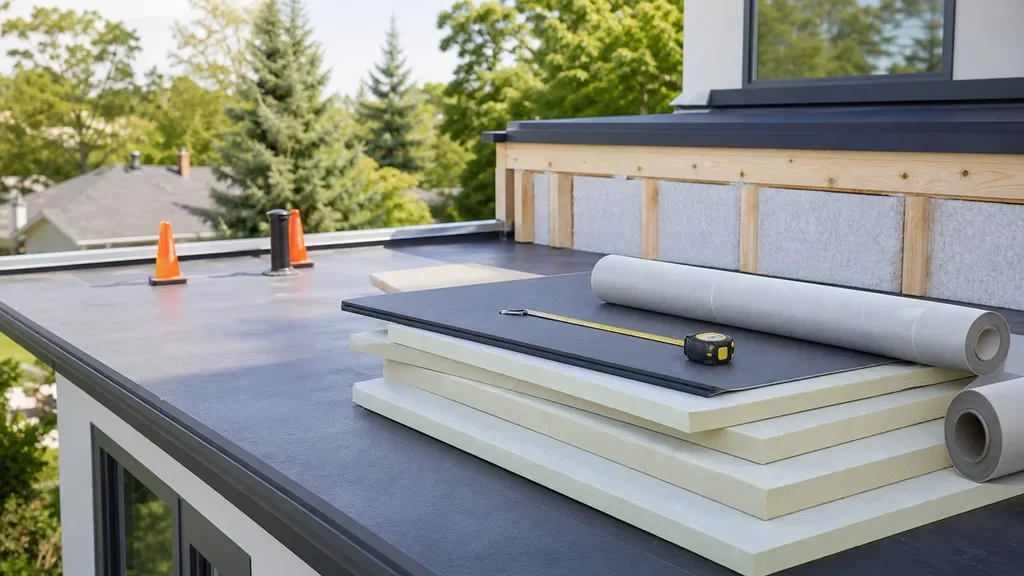
The flat roof insulation rebate Ontario 2026 search usually comes down to one practical question: can your low-slope roof upgrade qualify under the current Home Renovation Savings insulation rules? For many Ontario homeowners, the answer may be yes, but the details matter because flat roofs are handled differently from standard attic spaces.
Think of this as a pre-quote checklist. You want the contractor, R-value target, and rebate path clear before any roof assembly gets opened.
| What you see | Likely cause | First move |
|---|---|---|
| Cold rooms under a low-slope roof | Thin roof assembly insulation or thermal bridging | Ask for existing R-value and roof-area measurements |
| Ice, damp drywall, or stains near the roof deck | Air leakage, poor vapour control, or roof moisture issues | Fix moisture and air sealing questions before adding insulation |
| Contractor quote says attic rebate | Flat roof work may be grouped under cathedral ceiling / flat roof rules | Confirm the exact rebate category in writing |
| Only part of the roof is being upgraded | Project may miss the full roof assembly requirement | Check whether 100% of the roof assembly will be insulated |
What the 2026 flat roof rebate covers
Home Renovation Savings treats flat roof insulation alongside cathedral ceiling insulation on its no-assessment attic insulation page. That is useful, but it also means you should not compare your project straight across to a normal open attic rebate.
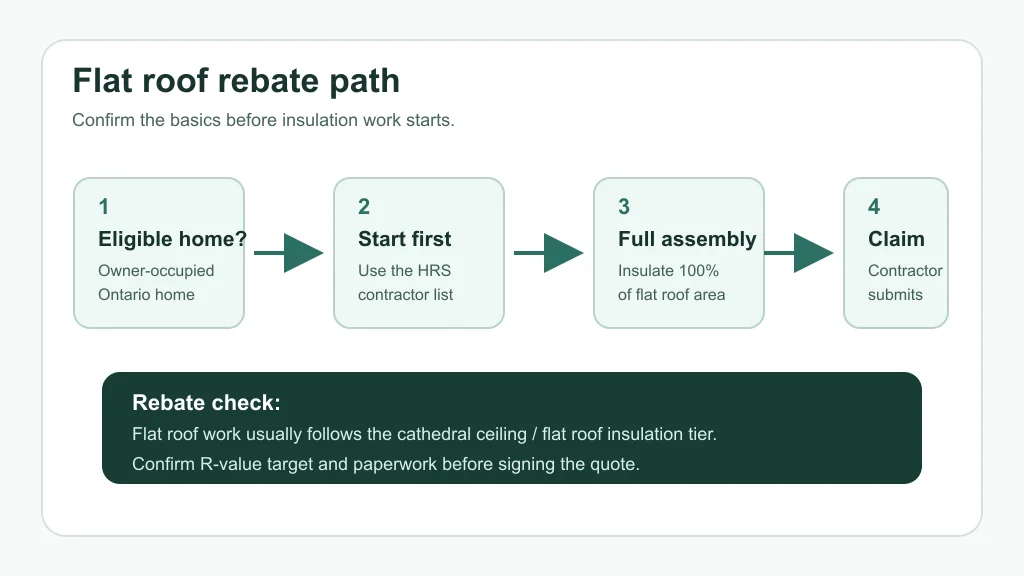
For the standalone path, the public program page says a home energy assessment is not required. It also says you must work with a participating contractor and insulate 100% of the total roof assembly area to qualify.
Rebate amounts and R-value targets
For flat roof or cathedral ceiling insulation, the current Home Renovation Savings page lists two no-assessment tiers. If the existing insulation is R-25 or less, the target shown is R-28 with a maximum rebate of $750. If the existing insulation is R-12 or less, the target shown is R-20 with a maximum rebate of $650.
Those numbers can look odd at first because the R-28 tier has a higher target and higher rebate than the R-20 tier. Ask your contractor to document your starting R-value, the installed product, and the final roof assembly R-value so the claim is not left to guesswork.
| Flat roof / cathedral ceiling starting point | Minimum target listed | Maximum rebate shown |
|---|---|---|
| R-25 or less | R-28 | $750 |
| R-12 or less | R-20 | $650 |
Eligibility checks before you book
Start with the homeowner rules. The program says you must own the home, and eligible home types include detached and semi-detached homes, row or townhomes, and mobile homes on a permanent foundation. Stacked townhomes and new homes occupied for six months or less are excluded.
Heating source matters too. You may fit if you are an Enbridge Gas customer with an active account and primarily heat with a natural gas furnace or boiler, or if you are connected to the Ontario electricity grid and heat with electricity, oil, propane, or wood. Cornwall Electric has a special exclusion for non-Enbridge primary heating, so local utility details are not just fine print.
How the contractor process usually works
Use the program form first, then choose from the participating insulation contractor list you receive. The contractor helps choose the right insulation type for the attic, cathedral ceiling, or flat roof work and normally handles the application and documentation after installation.
You should still keep your own file. Save the quote, product data sheets, invoices, photos before the work is covered, and any rebate emails. If a roof detail changes during the job, get the change in writing.
Flat roof details that can affect the quote
Low-slope roofs are less forgiving than open attics. The installer may need to account for roof membrane condition, parapets, drainage slope, roof penetrations, interior ceiling access, vapour control, and whether insulation is being added above or below the deck.
Honestly, this is where people usually get it wrong. A cheap insulation number can become expensive if the roof covering is near the end of its life or if the assembly traps moisture. You want the rebate math and the building-science detail to agree.
Where this fits with other Home Rebate Hub guides
If your roof is not truly flat, compare the details with our cathedral ceiling insulation rebate guide. Standard attic projects should use the attic insulation R-12 to R-50 guide instead.
For contractor selection, read the Home Renovation Savings participating contractors guide. If you are unsure whether your project needs an audit, compare the assessment versus no-assessment paths.
Planning several upgrades at once? The broader Ontario insulation rebate guide, Home Renovation Savings program guide, and Canada Greener Homes Loan update can help you place the roof work in a bigger budget.
Some homeowners pair envelope work with mechanical or electrical upgrades. Related planning guides cover the heat pump water heater rebate, heat pump cost in Ontario, Enbridge heat pump rebate basics, and Ontario heat pump rebate rates.
For non-insulation upgrades, see the no-assessment heat pump guide, window rebate guide, EV charger installation cost guide, smart thermostat rebate guide, and solar battery storage rebate guide.
Quick Checklist
- Confirm your home type and ownership status before requesting quotes.
- Use the Home Renovation Savings form to get the participating contractor list.
- Ask whether your project falls under the flat roof / cathedral ceiling tier.
- Get starting R-value, target R-value, and roof area in writing.
- Confirm the project covers 100% of the roof assembly area being claimed.
- Keep invoices, product documents, photos, and rebate emails together.
- Check the current official page again before work starts.
A flat roof insulation rebate can be worth pursuing, but only if the project is eligible and the roof assembly is designed properly. Get the paperwork clear first, then let the insulation plan follow the building, not the other way around.
Frequently Asked Questions
how much is the flat roof insulation rebate in Ontario 2026?
On the no-assessment Home Renovation Savings attic insulation path, the flat roof category is listed with cathedral ceiling insulation. The current public page shows up to $750 for reaching R-28 from R-25 or less, or up to $650 for reaching R-20 from R-12 or less.
does flat roof insulation need a home energy assessment in Ontario?
For the standalone attic, cathedral ceiling, and flat roof insulation rebate path, Home Renovation Savings says a home energy assessment is not required. Other upgrade bundles may still use an assessment path, so do not mix the rules without checking your application route.
can I start flat roof insulation before applying for the rebate?
Do not assume you can. The safer move is to confirm eligibility first and use the participating contractor process before work starts, because the contractor normally completes the application and submits documentation.
what R value do I need for a flat roof insulation rebate?
The public HRS page lists two flat roof or cathedral ceiling targets: reach R-28 when the existing level is R-25 or less, or reach R-20 when the existing level is R-12 or less. Ask the contractor to show the starting and target R-values on the quote.
are stacked townhomes eligible for Ontario flat roof insulation rebates?
No. The current Home Renovation Savings eligibility notes exclude stacked townhouses and new builds occupied for six months or less. Detached, semi-detached, row or townhomes, and mobile homes on a permanent foundation may qualify if the other rules fit.
Official source: Home Renovation Savings attic insulation rebate page. Check the live program page before applying.